
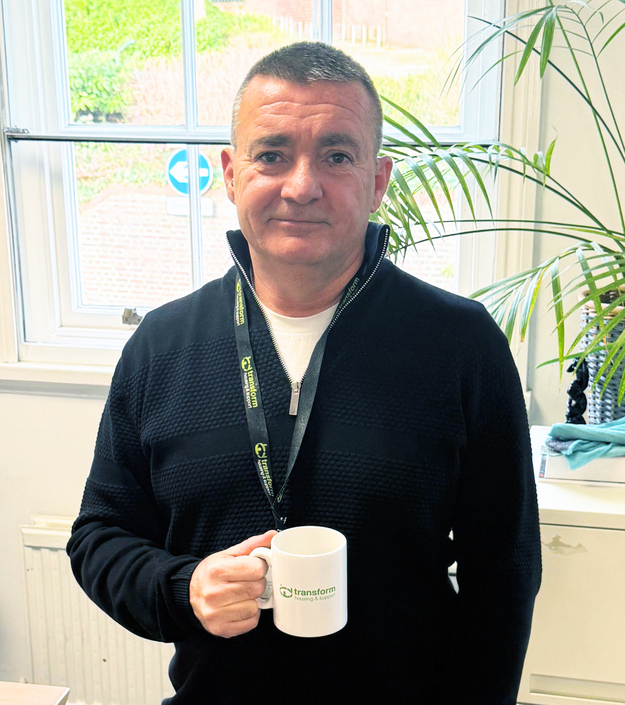
Paul
,
Housing and Support Manager
What is your current role?
Housing and Support Manager, since November 2024. I joined as a Housing and Support Officer in May 2004, so just over 21 years ago, which is obviously a good sign. It's the longest job I've ever had. After two or three years, I was promoted to Deputy Manager, so I’ve seen a lot of changes through the years. When I first joined, I was based in Epsom. Now I’m in Reigate. Back then, the company was called Surrey Community Development Trust. I much prefer the name Transform because it really does what we do. We transform people’s lives, house and support them.
What experience did you have in housing and support before Transform?
For about three years, I worked at a challenging behaviour unit in southeast London. I was living in London at the time, then moved to Epsom and worked for a company supporting visually impaired people. I applied here because I was attracted to the diversity of the client groups, especially the drug and alcohol area.
What other roles have you had within the organisation?
As I mentioned, I started as a Housing and Support Officer and worked my way up. It was nice to already know the organisation, the clients and the properties. The Housing and Support role is really two roles in one. There’s the landlord side and the support side, which are very different.
What does a typical day at work look like?
No two days are the same. The nature of our client groups means things change all the time and new challenges come up unexpectedly. That’s what keeps me interested. As a manager, I don’t have as many clients now. I’m in the office more, managing staff and doing admin, stepping into situations when I’m needed and supporting the deputies and officers. I like the variety. I make sure the team runs smoothly. I’m lucky to have three experienced Deputy Managers.
This isn’t the kind of job where you need a degree. You really learn on the job. I’d say having common sense is the most important thing. We’re the biggest team at Transform, based in Reigate.
How do you decide who works with which clients?
We usually aim for an equal caseload, but more experienced staff often have more clients or those with more complex needs. We also make sure the caseload is varied, which colleagues appreciate. They like having a mix of different client groups.
What do you like most about working at Transform?
Definitely helping the clients and seeing them move on in a planned and positive way. Sometimes clients come to us from really difficult situations like rehab, psychiatric wards or prison. They often arrive quite broken, their lives unravelled. Working with them over two to three years and helping them move into a more independent life or into their own flat is what we’re here to do. That’s the best part. It’s not all rainbows and roses. There are ups and downs, but seeing that journey from start to finish is amazing. We’ve even seen clients go on to university.
Why did you apply to work at Transform?
The job description really appealed to me because it covered lots of different areas where people struggle. I’ve always had an interest in mental health, addiction and supporting ex-offenders. I also had family members who struggled with addiction, so that drew me in as well. I’ve learned so much since.
What do you think of Transform as an organisation to work for?
Transform has come a long way, especially in terms of technology and regulation. We’re very well regulated, which I think is really important for the clients and for the organisation.
What’s the weekly structure like?
We have regular team meetings, deputy meetings and everything is well organised, so everyone stays informed. I’m responsible for things like keeping an eye on the team’s training records. It can feel like firefighting at times, but we work really well as a team and support each other.
What training have you received?
Loads. Transform is great at asking what you think would help you perform at your best. Recently, I did a course aimed at managers about supporting team members with neurodiverse conditions. Some of our colleagues have ADHD or autism and have shared that, so it’s really useful. We’ve got a good performance development training programme too. When I moved into management, I had training to support me in that transition.
What would you say to someone looking to work at Transform?
Don’t think twice. Go for it. You’ve got nothing to lose and you’ll be really well supported. Transform has come on leaps and bounds in terms of wellbeing, and the benefits are great. I genuinely think Transform looks after its colleagues.
What do you think you’ve gained personally from working here?
I’ve become much more aware of people’s needs and more sympathetic to their histories. People don’t choose to be addicted to something. It’s usually a way of coping with trauma, whether past or present. It’s the same with offending. It’s not a life people choose. It’s often about their circumstances, how they were raised, and those two things often go hand in hand. I’ve gained a deep understanding of those cycles. A lot of people can be judgmental, especially if they haven’t been exposed to this kind of work. Working here has taught me never to judge anyone and to treat people the way you’d want to be treated.
Had you done anything similar before joining Transform?
I did lots of different jobs before. In my mid-twenties, I went backpacking in Australia for almost a year. That’s when I realised I wanted to do something meaningful. When I came back, a friend mentioned some volunteering work at a challenging behaviour unit. I started doing weekends and eventually got offered a full-time role after a few months. That was my first step into this kind of work. I enjoyed the volunteering so much, and that’s when I realised this was what I wanted to do.
What’s your team like?
Amazing. We’re here to support each other. We’re like a small family.


